
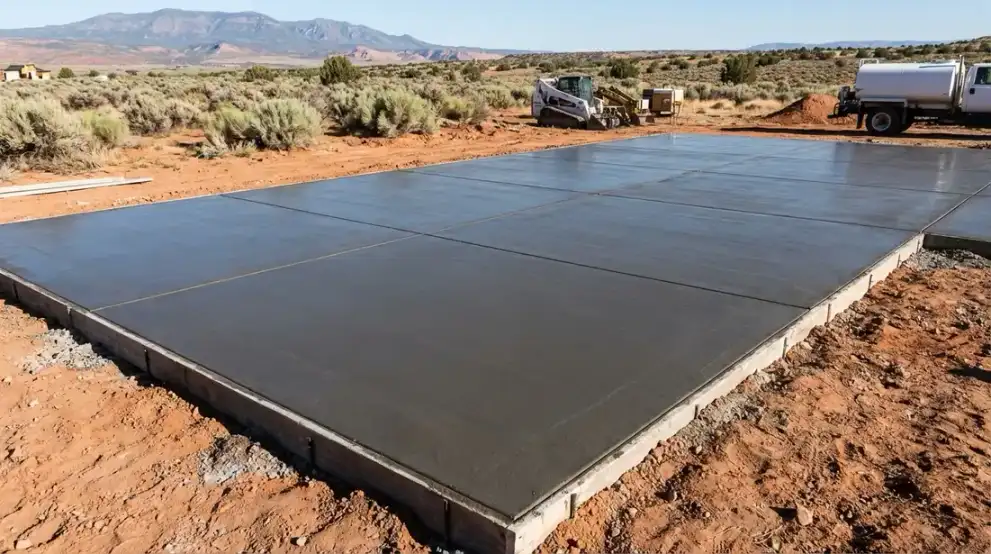
There is no single answer for every driveway
Thickness should be selected with the expected loads, subgrade, base preparation, reinforcement, drainage, and local transitions in mind. A passenger-car driveway and a pad used by heavier vehicles may need different details.
Base preparation is part of the system
Concrete performs best on a stable, properly compacted base. Adding thickness does not correct unsupported soil, poor drainage, or an unprepared subgrade.
Consider how the surface will be used
Daily passenger vehicles, trailers, RVs, delivery access, and turning areas create different load patterns. Edges and approaches may also receive concentrated stress.
Reinforcement and joints matter
Reinforcement helps hold the slab together, while control joints guide normal shrinkage cracking. Their design should work with the slab dimensions and expected use.
Confirm details at the property
A contractor should review grades, drainage, garage and sidewalk transitions, equipment access, and planned vehicle use before recommending a build specification.