
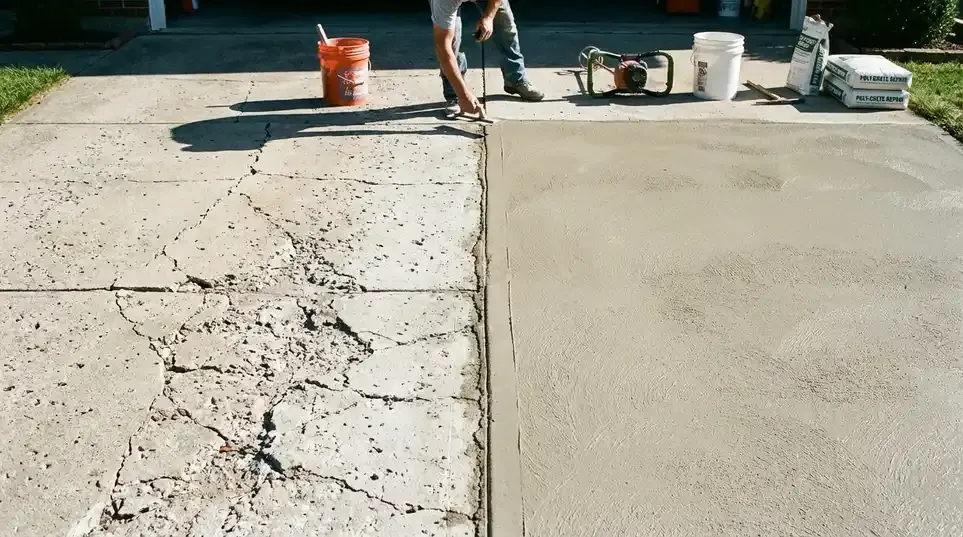
1. Uneven or settled panels
A panel that has dropped or lifted can create a trip edge, change drainage, and place stress on adjoining concrete.
2. Cracks that continue to widen
Small stable cracks and active movement are different problems. Monitor changes in width, displacement, and moisture intrusion.
3. Spalling or scaling surfaces
Flaking, pitting, and exposed aggregate can indicate surface deterioration. Deicing products, freeze-thaw exposure, finishing, and curing conditions may all contribute.
4. Water moving toward structures
Concrete should direct water away from foundations and sensitive transitions. Ponding or reverse slope deserves attention even when the surface looks intact.
5. Repeated patch failure
When the same area keeps breaking down, the issue may extend beyond the visible surface to base support, drainage, or ongoing movement.
Repair or replacement?
The right choice depends on the location, depth, stability, and cause of the damage. Rhode Concrete evaluates residential flatwork honestly and explains whether isolated work or full replacement makes more sense.